The 5,000-Year-Old Science of Life
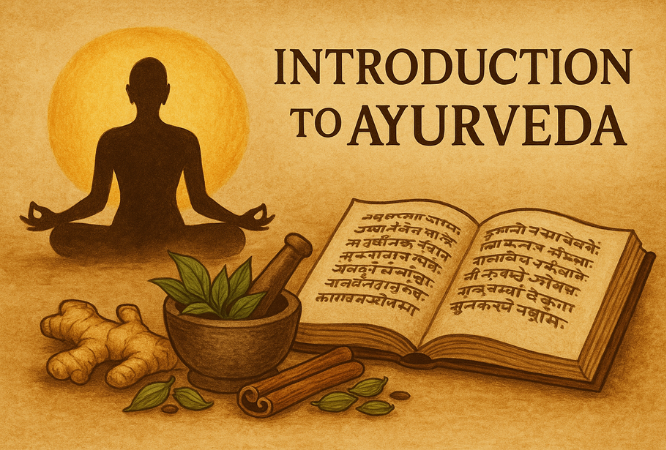
“Ayurveda, often translated as ‘The Science of Life’ (Ayu = Life, Veda = Knowledge), is widely considered the oldest continuously practiced healthcare system in the world. Originating in the ancient Vedic culture of India over 5,000 years ago, it is not merely a system of medicine but a philosophy of living in harmony with nature. Unlike modern medicine, which often focuses on fighting disease, Ayurveda focuses on promoting health by balancing the three fundamental bio-energies—Vata, Pitta, and Kapha—that govern all physical and mental processes.”
Historical Timeline (Key Points):
-
Vedic Roots (c. 3000 BCE): The earliest concepts of healing and longevity were recorded in the Atharva Veda, one of the four sacred texts of ancient India.
-
The Great Treatises (c. 800 BCE – 200 CE): The oral tradition was formalized into written texts. The Charaka Samhita established the principles of internal medicine, while the Sushruta Samhita laid the foundation for advanced surgery and anatomy.
-
Divine Legend: Mythology attributes the origin of Ayurveda to Lord Brahma, who passed this knowledge to Dhanvantari (the physician of the gods) to alleviate human suffering.
-
Global Evolution: From royal courts in ancient India to modern wellness centers in the West, Ayurveda has evolved into a globally recognized system of Complementary and Alternative Medicine (CAM).
Tag:Course

You may also like